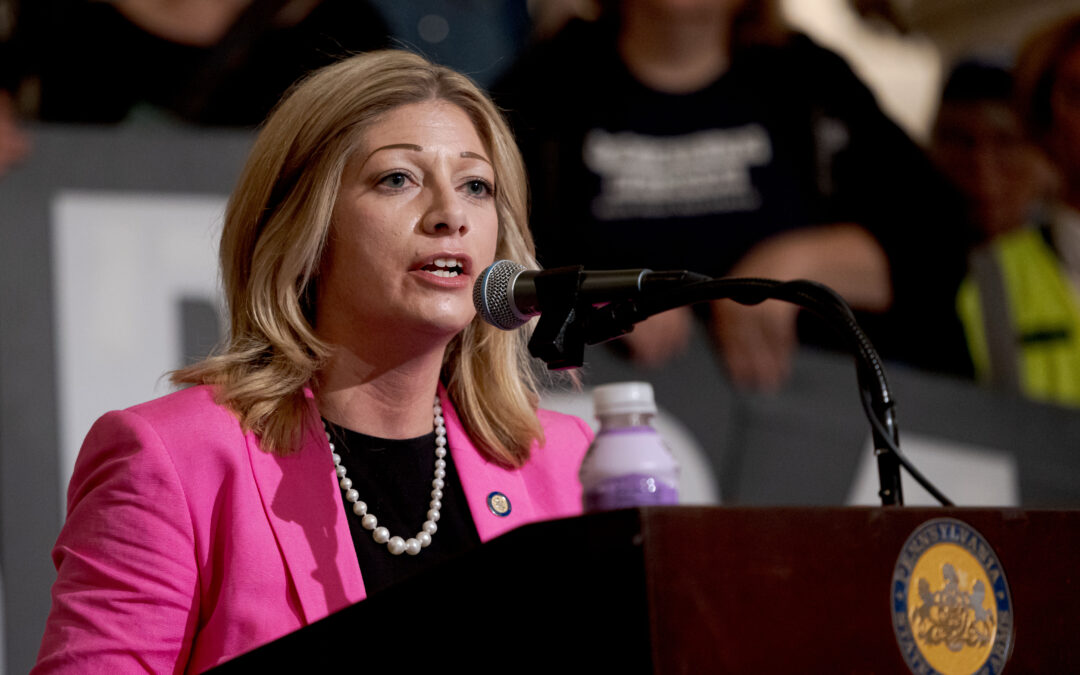
PA Senate Dems Joined PA House Dems & the PA Women’s Health Caucus for Hearing on Maternal Health and Vaccine Safety Amidst COVID-19
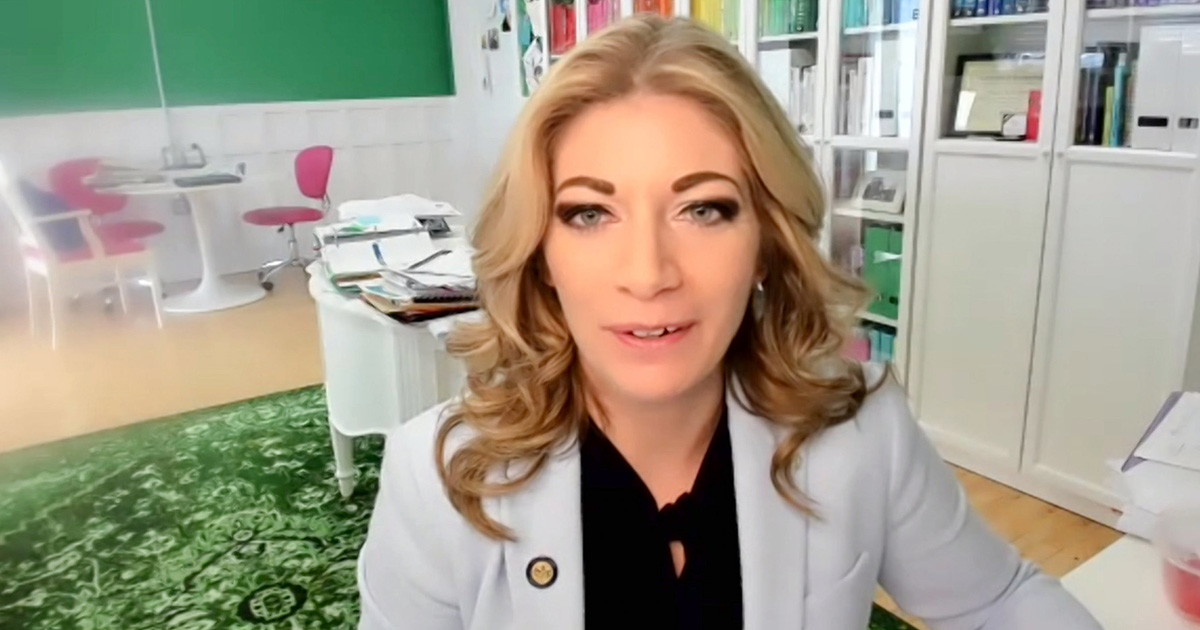
Harrisburg – February 11, 2021 - Yesterday, at the request of PA Women’s Health Caucus chairs Sen. Judy Schwank (D- Berks), Sen. Amanda Cappelletti (D- Delaware/Montgomery), Rep. Mary Jo Daley (D- Montgomery), and Rep. Morgan Cephas (D- Philadelphia), the Pennsylvania Senate Democratic Policy Committee joined the House Democratic Policy Committee held a virtual public hearing to discuss maternal health amidst COVID-19.
“Since the beginning of this pandemic, I have been deeply concerned about both the physical and mental health of mothers and families experiencing childbirth and caring for babies in the shadow of COVID-19,” Schwank said. “We must ensure that mothers and babies are receiving the best care possible and are receiving the support and services they need to maintain a healthy life during and after this pandemic.”
Cappelletti continued, “Women, particularly women of color, have been the most detrimentally impacted by this pandemic. Not only must they navigate health and safety for themselves, but they are often tasked as the primary caregivers and providers for their children and family. As we discuss all aspects of healthcare and the impact COVID-19 has had on women, we must ensure that women’s health and the health of their children are not left out of this conversation."
Dr. Richard Beigi, an OB-GYN practitioner and president of UPMC Magee-Women’s Hospital, spoke about the many concerns that pregnant women have had about getting the COVID-19 vaccine, as pregnant women were not specifically included in the clinical trials. He said that he is an advocate for including women in clinical trials from the start.
“There is no reason to think that these vaccines are harmful to pregnant women or their babies,” Dr. Beigi said. He stated that while he has seen no evidence to not vaccinate pregnant women, those who chose not to get the vaccination during their pregnancy should still be fully supported in their informed decision.
During her testimony, Dr. Elizabeth Morgan, a maternal fetal health specialist at Baystate Health in Massachusetts, also spoke on the inclusion of women in clinical trials because, “…excluding women from vaccine trials during a global pandemic really is experimentation in itself when we know that they are at high risk of the disease.”
Dr. Catharine I. Paules, assistant professor of infectious diseases at Penn State Health College of Medicine and Penn State Health, has worked at the National Institute of Health with Dr. Anthony Fauci, and is currently pregnant herself. She shared that she chose to get the Pfizer vaccine for COVID-19 after her pregnancy was at full term, and after reading the medical literature from the United Kingdom about the variant of COVID-19 that anecdotally did have more severe impacts on pregnant women in that country.
Dr. Morgan shared that Baystate Health in conjunction with University of Massachusetts Medical School, has produced documents in 10 different languages to assist pregnant women who are currently making the decision on getting their COVID-19 vaccine, and that information has been downloaded over 35,000 times. She also stated that COVID-19 has had other significant determinants of health including low income, food and housing insecurity and crowding, among other factors.
“The fact that it’s 2021, and women of color are still three times as likely to die giving birth than other women is unacceptable,” said Rep. Cephas. “Access to quality and affordable care should never be based on skin color or zip code, and the COVID-19 pandemic has only worsened these disparities. We must now take what we discussed at today’s hearing and turn it into substantial reforms that reduces improves maternal health outcomes across the commonwealth.”
Dr. Sindhu K. Srinivas, the Director of Obstetrical Services at the Hospital of the University of Pennsylvania, said, “I am among many of us who are on the front lines of the maternal morbidity and mortality crisis and am deeply troubled by rising morbidity and mortality rates and associated disparities.”
Dr. Srinivas said that the COVID-19 crisis has accelerated the work of her and her colleagues to pilot programs out of Penn Medicine that assist women immediately after they have given birth and go home with their babies. She said that 50% of maternal morbidity and mortality actually occur in this time frame.
Increasing access to broadband internet, increasing digital literacy, making sure that technological resources are available in multiple languages, and making sure that telehealth is reimbursable by insurance companies and Medicaid are all essential in continuing to create programs that increase parity and decease maternal morbidity and mortality, said Dr. Srinivas.
Data has shown that there are an estimated 700 pregnancy-related deaths in the U.S. every year, and three out of five of those deaths are preventable. While maternal mortality rates are declining in other developing countries, but they are rising across the United States.
“The public health social distancing protocols put in place during the pandemic have also increased social isolation. This has left new mothers lacking social support, social interactions, and help with childcare,” Dr. Rhonda C. Boyd, a psychologist in the Department of Child and Adolescent Psychiatry and Behavioral Sciences at The Children's Hospital of Philadelphia, said. “For perinatal women who are of color, especially Black, Latina, and Indigenous mothers, they are also disproportionally being impacted by family members contracting COVID-19 or dying from it. This situation understandably results in increased stress, worry and grief.”
“The impact of this pandemic on women with young families cannot be measured, however, with already limited access to high quality healthcare especially for pregnant persons of color, we must measure the impact to find ways to increase care now and in the future,” Rep. Daley said.
Demia Horsley, Director of Strategic Initiatives at Healthy Start, Inc. of Pittsburgh, stated the importance of doulas in the birthing and post-partum experience of many mothers. Horsley said that pandemic restrictions allowing only one person to be with a woman during birth can be detrimental to a woman’s health during and after birth. Horsley said that a partner may not be the best advocate for a women during the birth and postpartum process, and increasing access to doula services for prenatal, birthing, and postpartum women will create better outcomes in maternal mortality and addressing postpartum depression early and effectively.
“I am so grateful that we were able to bring together the PA Women’s Health Caucus, along with our colleagues in the House, to discuss the impacts of COVID-19 on women’s health now, and the impact that this will have on healthcare system for years to come,” Sen. Katie Muth (D- Berks, Chester, Montgomery), chair of the Senate Democratic Policy Committee, said. “These conversations and recommendations are essential to crafting the policies that will protect the lives of moms and babies.”
“Giving a voice to women’s health and the inequities amongst women of color is extremely important and I’m thrilled my colleagues are having these conversations. Concerns may seem routine for medical professionals, but it’s a whole new ballgame for women and we must make sure they are heard,” Rep. Ryan Bizzarro, Chair of the House Democratic Policy Committee, said.
Senators who attended included Senator Democratic Leader Jay Costa (D- Allegheny), Nikil Saval (D- Philadelphia), John Kane (D- Chester/Delaware), Wayne Fontana (D- Allegheny), Lindsey Williams (D- Allegheny), Sharif Street (D- Philadelphia), and Tim Kearney (D- Chester/Delaware).
House Representatives who attended this hearing include Bridget Kosierowski (D- Lackawanna), Joe Webster (D- Montgomery), Melissa Shusterman (D- Chester/Montgomery), Mike Schlossberg (D- Lehigh), Elizabeth Fiedler (D- Philadelphia), Pam DeLissio (D- Montgomery/Philadelphia), Perry Warren (D- Bucks), Kyle Mullins (D- Lackawanna), Ben Sanchez (D- Montgomery), Pam Snyder (D- Greene/Fayette County/Washington), Mike Zabel (Delaware), Regina Young (D- Philadelphia County/Delaware), Joe Hohenstein (D- Philadelphia), Carol Hill-Evans (D- York), Dan Frankel (D- Allegheny), and Summer Lee (D- Allegheny).
Below are all who testified in today’s hearing:
- Dr. Mark Woodland, M.S., M.D., FACOG, Chair & Clinical Professor OB-GYN, Reading Hospital/Tower Health, Interim Academic Chair, OBGYN Drexel University College of Medicine
- Dr. Hyagriv “Hy” Simhan, UPMC Magee-Women’s Hospital, Division Chief of Maternal Fetal Medicine
- Dr. Richard Beigi, UPMC Magee-Women’s Hospital, President, OB-GYN'
- Dr. Aasta Mehta, M.D., M.P.P., FACOG - Philadelphia MMRC, Philadelphia Dept of Health, PA MMRC
- Dr. Sindhu K. Srinivas, M.D., MSCE, Director of Obstetrical Services at the Hospital of the University of Pennsylvania, Vice Chair for Quality and Safety, Physician Lead, Women’s Health Service Line, Penn Medicine
- Nicole Chaney, Certified Nurse-Midwife, Reading Hospital
- Markita Glenn, Doula, Pettaway Pursuit Foundation
- Dr. Elizabeth Morgan, Maternal Fetal Health Specialist, Baystate Health
- Dr. Richard S. Legro, M.D, Chair, Department of Obstetrics and Gynecology, Professor of Obstetrics and Gynecology and Public Health Sciences, Penn State Health College of Medicine and Penn State Health
- Dr. Catharine I. Paules, M.D., Assistant Professor, Infectious Diseases, Penn State Health College of Medicine and Penn State Health
- Dr. Rhonda C. Boyd, Ph.D., Psychologist in the Department of Child and Adolescent Psychiatry and Behavioral Sciences at The Children's Hospital of Philadelphia
- Demia Horsley, M.P.H., CLC (DONA), LCCE, Director of Strategic Initiatives, Healthy Start, Inc.
The full recording of this hearing can be found at senatormuth.com/policy.
###